
Designing Learning Experiences That Drive Performance
Learning programmes often fail not because the content is poor, but because the learning experience has not been intentionally designed. Effective learning requires more than information delivery. It requires engagement, relevance, application and reinforcement. This article explores how organisations can design learning experiences that improve participation, support capability development and deliver meaningful performance outcomes.
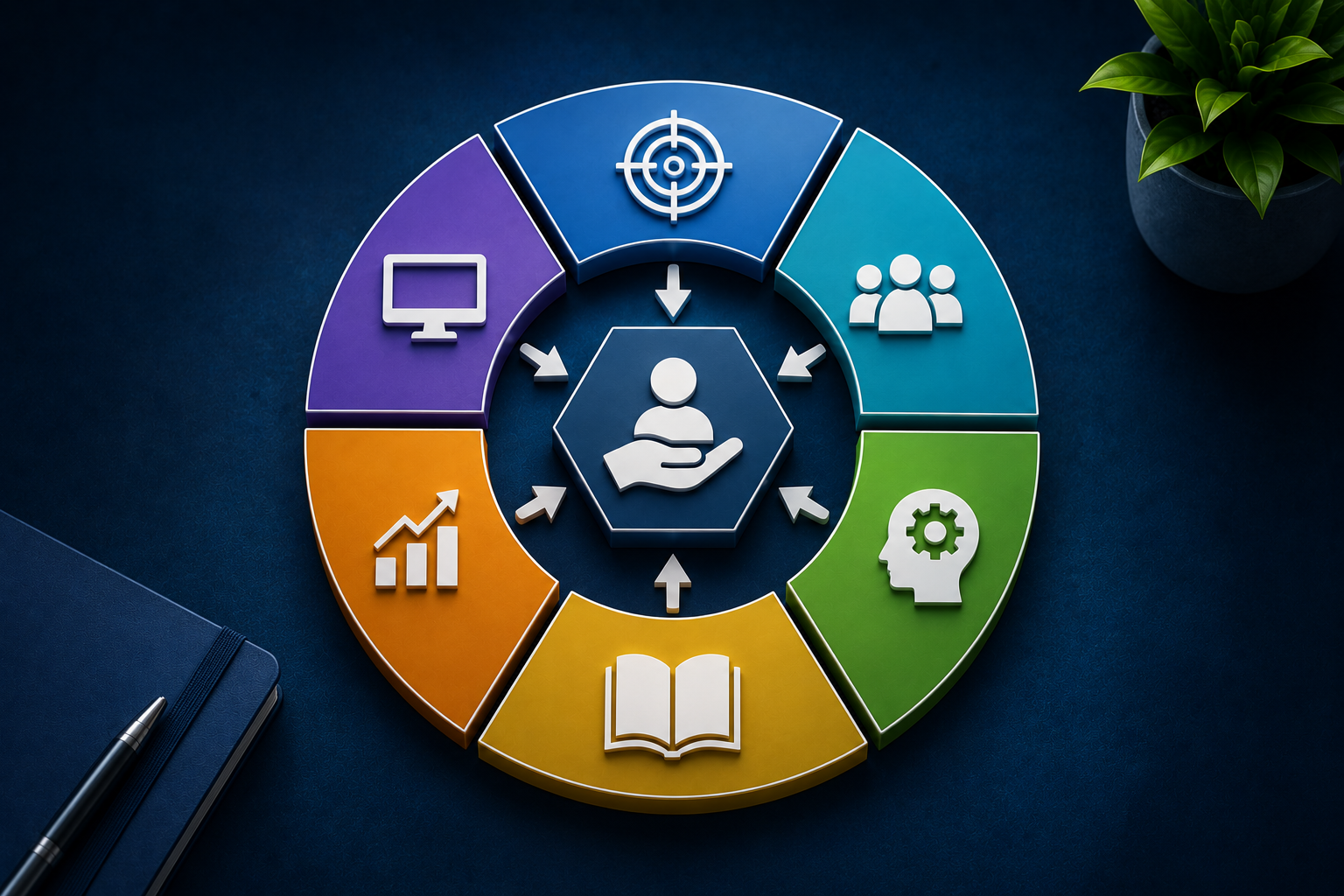
Why Learning Experience Design Matters
Many organisations invest significant time and resources creating learning content. Yet despite these investments, common challenges persist:
- Low engagement
- Poor completion rates
- Limited behavioural change
- Weak knowledge retention
- Minimal workplace application
The problem is rarely content alone. Learning succeeds when individuals experience a process that encourages participation, reflection, application and continuous development. This is the role of learning experience design. Learning experience design focuses on how people engage with learning, rather than simply what information is presented.
Moving Beyond Content Delivery
Traditional approaches often assume that providing information will automatically improve performance. In reality, learning and performance are not the same thing. People must:
- Understand new concepts
- Connect them to existing knowledge
- Apply them in practice
- Reflect on outcomes
- Reinforce learning over time
Without this process, knowledge frequently remains theoretical. Effective learning experiences create opportunities for learners to move beyond awareness and towards capability.
The Components of Effective Learning Experiences
Strong learning experiences typically include several interconnected elements.
- Relevance – Learners need to understand why learning matters. The clearer the connection between learning and workplace performance, the stronger engagement tends to be.
- Participation – Active involvement increases retention and understanding. Discussion, practice and problem-solving generally produce stronger outcomes than passive consumption.
- Application – Learning should be applied as close as possible to real workplace situations. Application transforms understanding into capability.
- Reflection – Reflection helps learners consolidate experience and identify future improvements.
- Reinforcement – Capability develops over time. Learning experiences should include opportunities to revisit and strengthen learning after formal interventions conclude.
Designing for the Learner Journey
Effective learning design considers the complete learner experience. This journey often includes:
- Before Learning
- Creating awareness
- Establishing relevance
- Setting expectations
- During Learning
- Delivering meaningful content
- Encouraging participation
- Supporting application
- After Learning
- Reinforcing learning
- Encouraging reflection
- Supporting workplace implementation
Many programmes focus heavily on the middle stage while neglecting preparation and reinforcement. The result is reduced long-term impact.
Learning Experiences and Professional Capability
Professional capability development requires more than technical knowledge. Many professional skills are developed through:
- Practice
- Reflection
- Feedback
- Experience
- Continuous improvement
Learning experiences should therefore create opportunities for these activities rather than relying solely on information transfer. The goal is not simply to increase knowledge. The goal is to strengthen capability.
Technology as an Enabler
Digital learning technologies provide valuable opportunities to improve learning experiences. Examples include:
- Microlearning
- Social learning
- Interactive content
- Learning pathways
- Performance support tools
- Learning analytics
However, technology alone does not create effective learning experiences. Technology should support learning design rather than drive it. The learner experience remains the primary consideration.
Measuring Learning Experience Effectiveness
Learning experience quality can be evaluated through multiple indicators. These may include:
- Engagement levels
- Completion rates
- Learner feedback
- Knowledge retention
- Behavioural change
- Workplace application
- Performance improvement
The most meaningful measures focus on capability development and performance outcomes rather than participation alone. Learning experiences should ultimately contribute to organisational objectives.
Building Learning Experiences That Last
Sustainable learning experiences are designed for long-term impact. This requires:
- Alignment with organisational priorities
- Practical workplace relevance
- Opportunities for application
- Ongoing reinforcement
- Continuous improvement
Learning should not be viewed as a single event. It should be viewed as a continuing developmental process. When organisations adopt this perspective, learning experiences become more effective, more engaging and more valuable.
Key Takeaways
• Effective learning depends upon experience as well as content.
• Engagement, relevance and application are critical design considerations.
• Learning experiences should support the entire learner journey.
• Capability development requires practice, reflection and reinforcement.
• Technology supports learning design but does not replace it.
• Learning effectiveness should be measured through performance outcomes as well as participation.
• Sustainable learning experiences contribute to long-term capability development.
Conclusion
Learning experience design sits at the heart of effective capability development. Organisations that focus solely on content risk creating learning that is consumed but not applied. By designing learning experiences that encourage engagement, participation, application and reinforcement, organisations can create stronger capability outcomes and improve performance over time. Effective learning is not simply about delivering information. It is about creating experiences that change behaviour and build capability.
CONTINUE READING
Read Other Articles in This Series
Previous Article

Applying Learning Design Principles in Legal Training
Next Article

Building Sustainable Learning and Development Systems
Explore Related Topics
What to look for in QWE & Trainee Management Software
Recommended Next Step
-
Building Sustainable Learning and Development Systems
