
Why Trainee Litigation Programmes Still Matter in the SQE Era
The SQE has standardised solicitor assessment, but it has also introduced variability in practical experience. As firms identify gaps in trainee readiness, attention is turning to how those gaps can be addressed in a structured way. A Trainee Litigation Programme offers one practical response.
Originally published on 24 May 2024.

The SQE has changed the pathway — but not the capability requirement
The introduction of the SQE has shifted how trainees qualify. It provides a consistent assessment framework across legal knowledge (SQE1) and practical skills (SQE2).
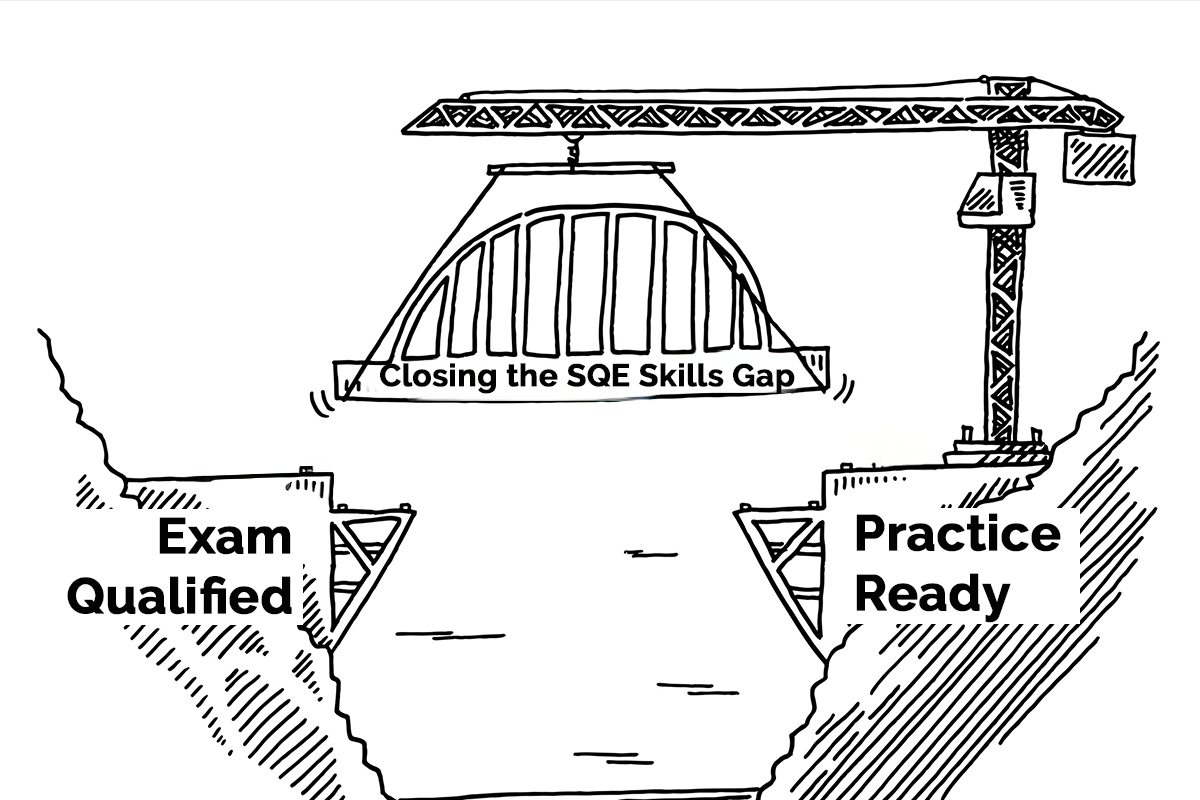
However, the SQE does not prescribe how firms develop those skills in practice. This has created a gap between assessment and applied capability.
Many firms are now asking a practical question: how do we ensure trainees are genuinely ready for the demands of practice, not just the SQE assessments?
The emerging gap in litigation exposure
Under the previous training contract model, trainees often gained structured exposure to contentious work. That is no longer guaranteed. In the SQE model:
- QWE can be gained across different organisations;
- Exposure to litigation can be inconsistent;
- Some trainees may complete their training with limited contentious experience.
This creates a risk. Trainees may qualify without having developed the confidence or judgement required for litigation-related work.
A structured response: the role of a Trainee Litigation Programme
As firms identify gaps in practical readiness, a Trainee Litigation Programme (TLP) offers one structured way to address them. A TLP provides a controlled, practical environment where trainees can develop key skills, regardless of their seat experience or client exposure.
Core areas typically include:
- Advocacy – presenting arguments clearly and persuasively
- Negotiation – managing settlement discussions effectively
- Case management – understanding the lifecycle of a matter
- Client interaction – communicating with clarity and professionalism
These are not theoretical skills. They require practice, feedback and refinement over time.
The value of a blended learning approach
Many firms are now using blended learning models to deliver this training more effectively.
A structured TLP that combines e-learning with practical assessment can offer several advantages.
- Flexible learning foundation – Online modules allow trainees to build knowledge at their own pace, making it easier to integrate training with workload.
- Interactive engagement – Well-designed digital content can include case scenarios, decision points and guided reflection, helping trainees apply what they learn.
- Practical application and feedback – Face-to-face or live online assessment sessions remain critical. They give trainees the opportunity to:
- apply skills in realistic scenarios;
- receive targeted feedback;
- understand how their approach compares to expected standards.
This combination helps bridge the gap between knowledge and performance.
Supporting trainees without contentious seats
Not all trainees will experience litigation during their QWE. A TLP helps address this imbalance. Even for those in non-contentious roles, the skills developed are highly transferable:
- structured thinking;
- managing risk and process;
- clear communication under pressure;
- effective negotiation.
This makes litigation training relevant beyond the disputes team.
Meeting client and firm expectations
Clients expect newly qualified solicitors to demonstrate a baseline level of professional competence, including the ability to manage disputes effectively where required.
From a firm perspective, inconsistent training can lead to:
- uneven capability across trainee cohorts;
- increased supervision demands post-qualification;
- slower progression to independent work.
Structured programmes help reduce these risks by creating a more consistent development pathway.
A practical response for L&D teams
For L&D teams, the question is not whether the SQE replaces structured training — it is how training should evolve alongside it. A Trainee Litigation Programme provides a practical response:
- it standardises exposure to key skills;
- it supports trainees with limited real-world opportunities;
- it aligns training with the realities of practice.
It also provides a clear framework that firms can use to support consistent capability development.
Key takeaways
- The SQE standardises assessment, but not practical capability development
- Litigation exposure during QWE is increasingly inconsistent
- Structured programmes provide a practical way to close capability gaps
- Blended learning models improve flexibility and engagement
- Litigation skills are transferable across practice areas
- A consistent training approach supports both trainees and firms
Conclusion
The SQE has reshaped qualification, but it has not removed the need for structured, applied training.
As firms identify where trainees are underprepared in practice, the focus is shifting towards practical solutions that support real-world readiness.
A Trainee Litigation Programme is one such solution. It enables firms to build confidence, competence and consistency across trainee cohorts, ensuring that qualification is matched by capability.
Further Information
If your firm is reviewing how litigation capability is developed within the SQE framework, a structured Trainee Litigation Programme may provide a useful foundation.
We would be happy to share further detail on how these programmes can be designed and delivered in practice.
CONTINUE READING
Read Other Articles in This Series
Previous Article
Where SQE Trainees Are Underprepared in Practice
Next Article

Choosing a Trainee Litigation Programme: What Firms Should Look For
Explore Related Topics

Setting the standard: Effective supervision in QWE
Recommended Next Step

Why eLearning Is a Practical Solution for SQE and QWE Training
