
Closing the SQE Skills Gap: Why Qualification Does Not Yet Mean Practice Readiness
The SQE has introduced a consistent and centralised approach to assessing legal competence. However, many firms are now seeing a gap between qualification and day-to-day capability. Understanding why this gap exists is essential for firms managing early-career development.
Originally published on 25 November 2025.
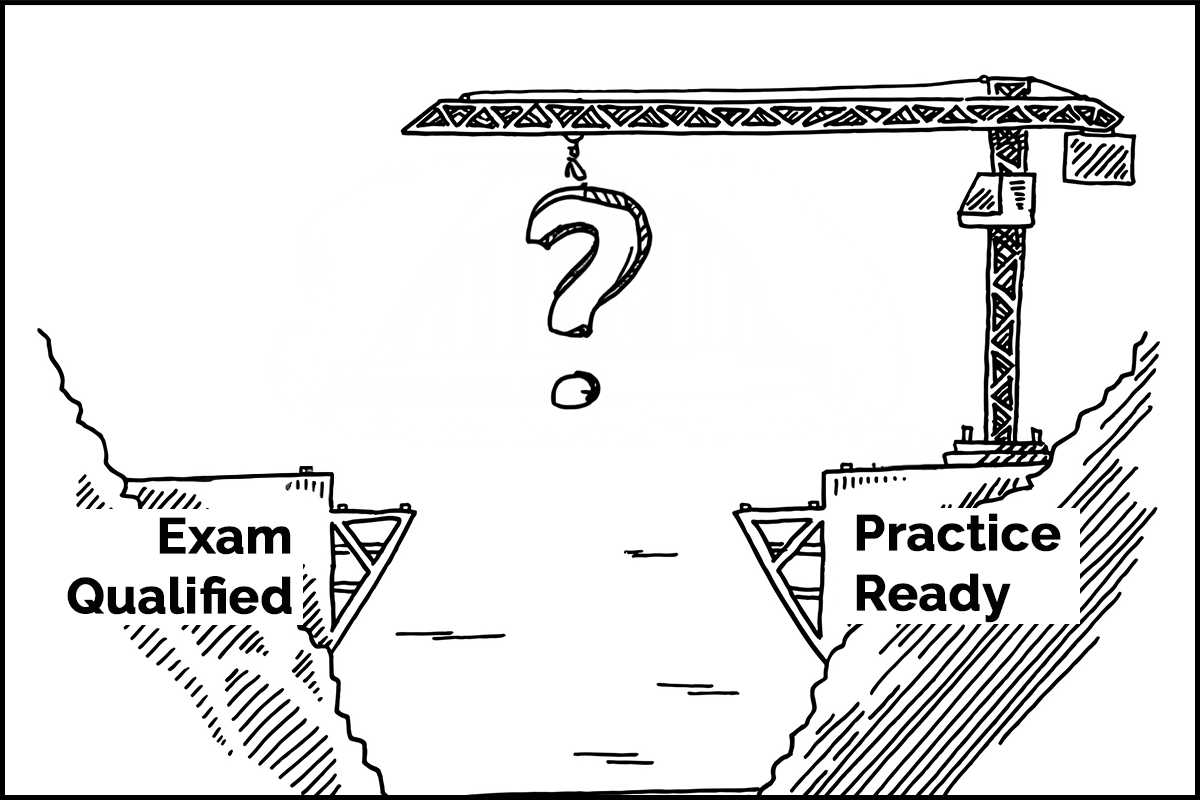
A new route, a familiar challenge
The introduction of the Solicitors Qualifying Examination (SQE) has reshaped the route to qualification. Its objectives—consistency, accessibility and standardisation—are widely supported across the profession.
However, a consistent theme is now emerging across law firms.
Newly qualified solicitors are passing the SQE, but many are not yet fully prepared for practice.
This is not a reflection of individual ability. It reflects a structural shift in how professional capability is developed.
What has changed in the SQE pathway
Under the previous LPC route, capability development was supported by:
- structured training contracts
- defined seat rotations
- the Professional Skills Course (PSC), which reinforced applied skills
The SQE has changed this model.
While it provides a robust and consistent assessment framework, it does not replicate the same level of structured, embedded development in applied practice skills.
As a result, responsibility for developing practice readiness has shifted more directly to law firms.
The emerging skills gap
Early feedback from L&D teams, training principals and supervisors points to consistent capability gaps.
These are most visible in:
- advocacy and litigation skills
- drafting under real-world conditions
- client communication and interaction
- commercial awareness and financial understanding
- professional judgement and decision-making
These gaps are not about legal knowledge. They relate to the application of that knowledge in practice.
Why this matters in practice
The impact of this gap is already being felt across firms.
Common themes include:
- Increased supervision
Supervisors are spending more time reviewing work and providing unplanned support. - Slower progression to independence
Newly qualified solicitors may take longer to handle matters autonomously. - Pressure on team capacity
Additional supervision and support requirements affect utilisation and workflow. - Early-career confidence
Individuals can feel qualified but not fully prepared, which can affect confidence and performance.
These are operational challenges, not theoretical concerns.
Understanding the root cause
The SQE is designed to assess competence against a defined standard.
It does not, and is not intended to, develop:
- firm-specific judgement
- confidence in ambiguous situations
- the ability to manage responsibility independently
These capabilities are developed through:
- structured experience
- supervision and feedback
- applied practice over time
Without a clear framework, this development becomes inconsistent.
What this means for firms
For firms, the implication is clear.
The SQE has not reduced the need for development—it has changed where and how that development needs to occur.
Firms now need to:
- define what practice-ready looks like internally
- identify capability gaps early
- introduce structured development to address them
This is not about replacing the SQE, but about complementing it.
Key Takeaways
- The SQE provides consistent assessment, but not consistent capability
- Capability gaps are primarily in applied skills and professional judgement
- Firms are experiencing increased supervision and slower independence
- Responsibility for capability development has shifted to employers
- Structured development is required to bridge the gap
Conclusion
The SQE represents a significant step forward in standardising qualification. However, qualification alone does not guarantee readiness for practice.
For firms, the challenge is to ensure that early-career lawyers develop the applied skills and judgement required to operate effectively.
Understanding the nature of the gap is the first step. The next is to consider how it can be addressed through structured development.
Further Information
If your firm is reviewing how early-career capability is developing under the SQE pathway, it may be useful to assess where practical gaps are emerging and how they can be addressed through structured training and support.
CONTINUE READING
Read Other Articles in This Series
Previous Article

Next Article
How Law Firms Are Responding to the SQE Skills Gap
Explore Related Topics

Setting the standard: Effective supervision in QWE
Recommended Next Step
Early Findings from the SQE: What Firms Are Seeing in Practice
